
Nutristyle By Chahat


When people think and talk about health, they usually jump straight to weight. But let’s be honest, your body doesn’t speak only through the weighing scale; it’s much more than that. It speaks through your energy, your mood, your skin, your sleep, your immunity, your digestion, your strength and even your cravings. And when something feels “off,” it’s often not random. It’s your body reacting to a nutritional imbalance. This is where an imbalanced nutrition care plan becomes important, not as a strict diet, but as a way to understand what your body is missing and how to fix it in a realistic, sustainable way.
Read Also: Read PCOS: Causes, Symptoms & Treatment Tips
At Nutristyle by Chahat, the focus has never been just weight loss. With years of experience and more than 2000 transformations, Chahat works closely with people to identify deeper issues, especially hormonal imbalances, that often go unnoticed.
An imbalanced nutrition care plan is a structured approach to correct what your body lacks or gets in excess, or balance out your nutritional requirements according to one’s needs. It is not about eating less or cutting everything you love.
Most people are either:
This imbalance will not reflect in a day, but if it’s been quite some time since your body is not getting its essentials, then it will start showing signs for it and slowly can also turn into a disease.
A proper care plan looks at:
Chahat’s approach at Nutristyle is very clear: fix the root, not just the symptoms. Because if your hormones, digestion, and metabolism are not getting the right support, slowly your body will need a long-term treatment plan.
Let’s not blame ourselves completely. Today’s lifestyle makes imbalance almost normal.
Here’s what usually goes wrong:
Long gaps between meals confuse your metabolism. Your body starts holding on to fat and energy instead of using it. Also, skipping meals can also impact your blood sugar, your gut and can also lead to severe concerns like gallstones.
Even “healthy” looking snacks can be low in real nutrition. They fill your stomach but not your body’s needs. But at today’s time, we are all looking for a quick fix so when it comes to packaged food, they support that need.
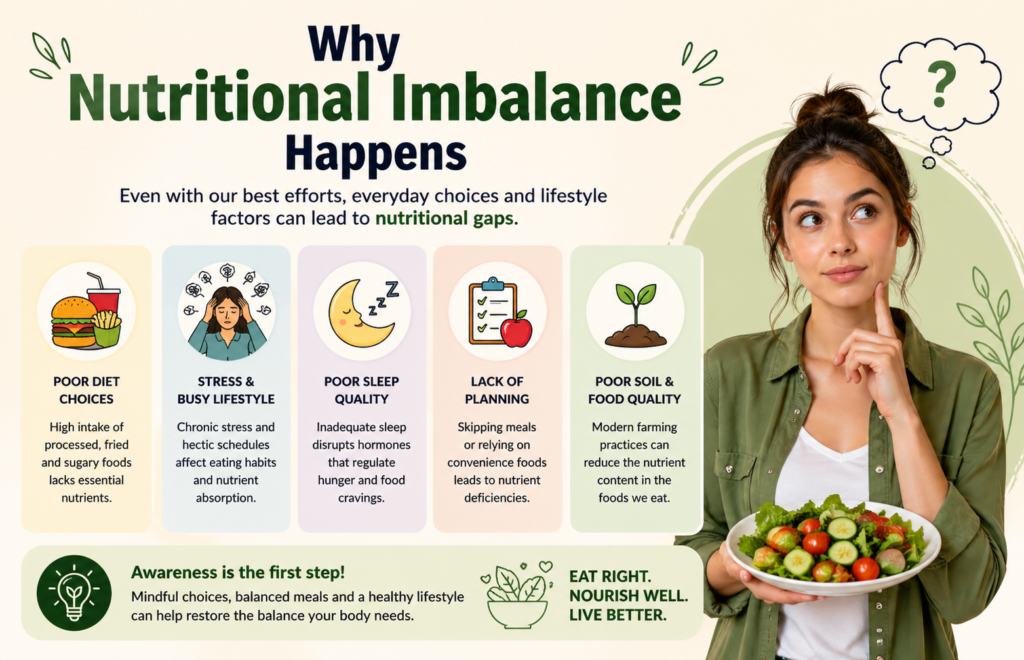
Many Indian diets are high in carbs but low in protein. This leads to low muscle strength, constant hunger, and slow metabolism. And we have never practised looking at our plate with faith that this will nourish us. We just eat because we are hungry, or maybe bored or stressed.
.High stress can affect your sleep, and lack of sleep leads to stress. And in today’s time, stress is a part of everyone’s life. And of course, who wants to sleep before 2 am? But in today’s time, not doing anything for your stressors can not only lead to poor sleep hygiene but can also lead to anxiety, slow metabolism and chronic fatigue issues.
A science-based nutrition plan understands your body, made according to your BMI and BMR. But getting access to everything becomes so easy, and by seeing a random diet online, people just blindly start following it.
Your body gives signals much before any serious issue shows up. The problem is, most people ignore them or normalise them. We can also say we actually take our bodies for granted.
Here are some clear signs that you may need an imbalanced nutrition care plan:

1. Constant Fatigue
You wake up tired. You feel low even after resting. This is not laziness-it’s often a lack of proper nutrients or poor absorption.
2. Frequent Cravings (Especially Sugar)
If you keep craving sweets or junk food, your body might be missing balanced meals. Blood sugar spikes and crashes create this cycle. Many people in India today suffer from Insulin resistance, and no pill can fix this if you’re actually not understanding or working on the root of it.
3. Hair Fall and Skin Issues

Hair thinning, acne, dull skin, brittle nails – these are not just cosmetic issues. They often point towards internal imbalance, especially related to vitamins, minerals, and hormones. And if not understood and treated at the right time, then cosmetics can also not help you deal with it.
4. Irregular Periods or Hormonal Issues
For women, this is one of the biggest signs. Hormonal imbalance is deeply connected to your nutrition, stress and how active your lifestyle is. Be it PCOS, Thyroid, Endometriosis, weight issues, etc., these are by-products of a malnourished body.
5. Digestive Problems

Bloating, constipation, acidity-if this is happening regularly, your gut is not happy. And the gut is also called the second brain of your body. A gut which is not being supported by the right nutrition can lead to not just the issues you see regularly, but also low immunity, acne, mood swings, brain fog, etc.
6. Sudden Weight Gain or Difficulty Losing Weight
If your weight is not responding despite “dieting,” the issue is deeper. Your weight loss or gain is not just about the calories you take in and burn. It’s also about inflammation, chronic stress, and hormonal imbalance. And without understanding your body’s nutritional needs, you cannot correct it.
Most people wait. They adjust. They say things like:
But these are not small things. These are early warnings.
By the time people take action, the imbalance has already affected:
And then the journey becomes harder.
A good plan doesn’t confuse you. It simplifies things. It teaches you how, with a practical approach, you can complete your nutritional requirements.
At Nutristyle by Chahat, the idea is very clear: make changes that you can actually follow and that resonate with your current life’s pattern.
A proper plan focuses on:
No extreme diets. No shortcuts. Just a practical approach to support the body you live in.
Because healing doesn’t happen in 7 days, but it does happen when you start connecting with your body and honouring its needs.
Your body is always communicating. The question is, are you listening?
If you feel something is off, it probably is. And the sooner you address it, the easier it is to fix.
An imbalanced nutrition care plan is not just about food. It’s about understanding your body better and giving it what it actually needs.
It is a way to make your diet better by figuring out what your body is missing or getting too much of, and then making changes one step at a time.
If you are always feeling tired, having cravings, stomach problems or hormone issues, your body might be out of balance.
Yes, it can significantly affect hormones. Eating poorly can disrupt hormones, in women, which can cause problems like periods that are not regular and weight gain.
No. When you diet, you are usually trying to lose weight. An imbalanced nutrition care plan is about getting your health and balance right for a long time.
It depends on your body. What is going on with it? Some people start feeling better in a week, but people who have been dealing with problems for a long time need plans that last a long time to fix their nutritional imbalance.